All work03 / 05

Retail · List Management

Walmart

Walmart's List Management pod brought me in to coach them through a discovery-led redesign. Eight months later, two new surfaces had shipped: voice-to-shop in the Walmart app, and text-to-shop over SMS. Both got built on how shoppers actually use their lists, which turned out not to be what the pod first assumed.

Client
Walmart Inc.
Year
2022
Role
Lead UX · Discovery Coach
Duration
8 months
Walmart

Scope

Discovery & Research
Team Coaching
Customer Journey Mapping
Multi-Surface Design

Team

I came in as Design Lead, embedded inside Walmart's List Management pod in the e-commerce org. Six people in total: 2 engineers, 2 PMs, and 2 designers (1 plus me). Two goals from leadership: coach the team into discovery-driven product work, and ship something real to prove the new posture held.
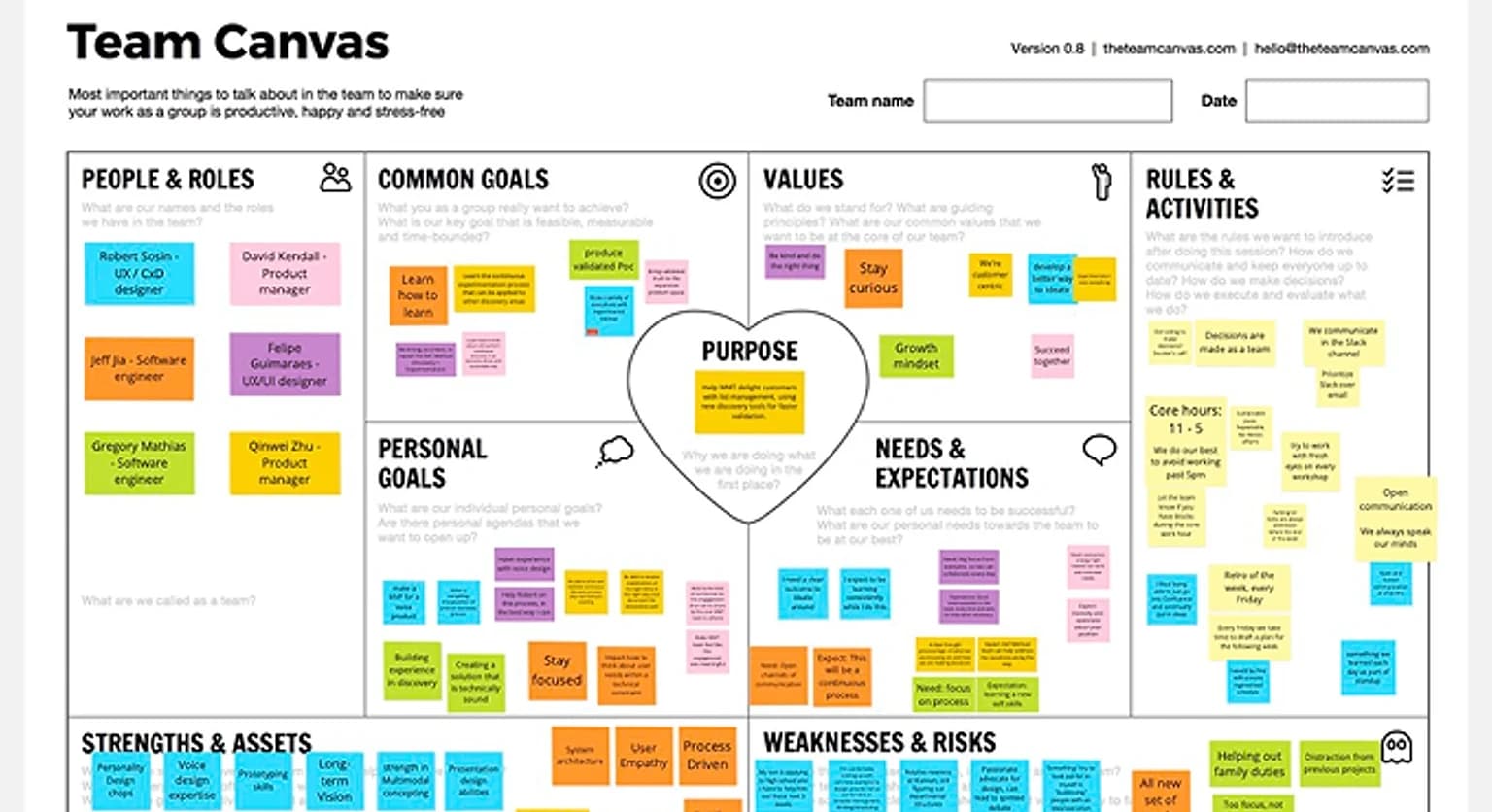
Team Canvas workshop board with the full Walmart List Management pod
Team Canvas kickoff. The pod aligned on purpose, roles, working agreements, and how we would handle failed experiments. That mattered later, when research challenged early assumptions.

Challenge

The pod was guessing. Engineers built what was easy. PMs chased the OKR. Stakeholders flew in competing regional asks. Real discovery (talking to shoppers, testing hypotheses, killing the bad ones) wasn't yet how anyone worked. The brief from leadership was straightforward: change that, and ship something real to prove it changed.
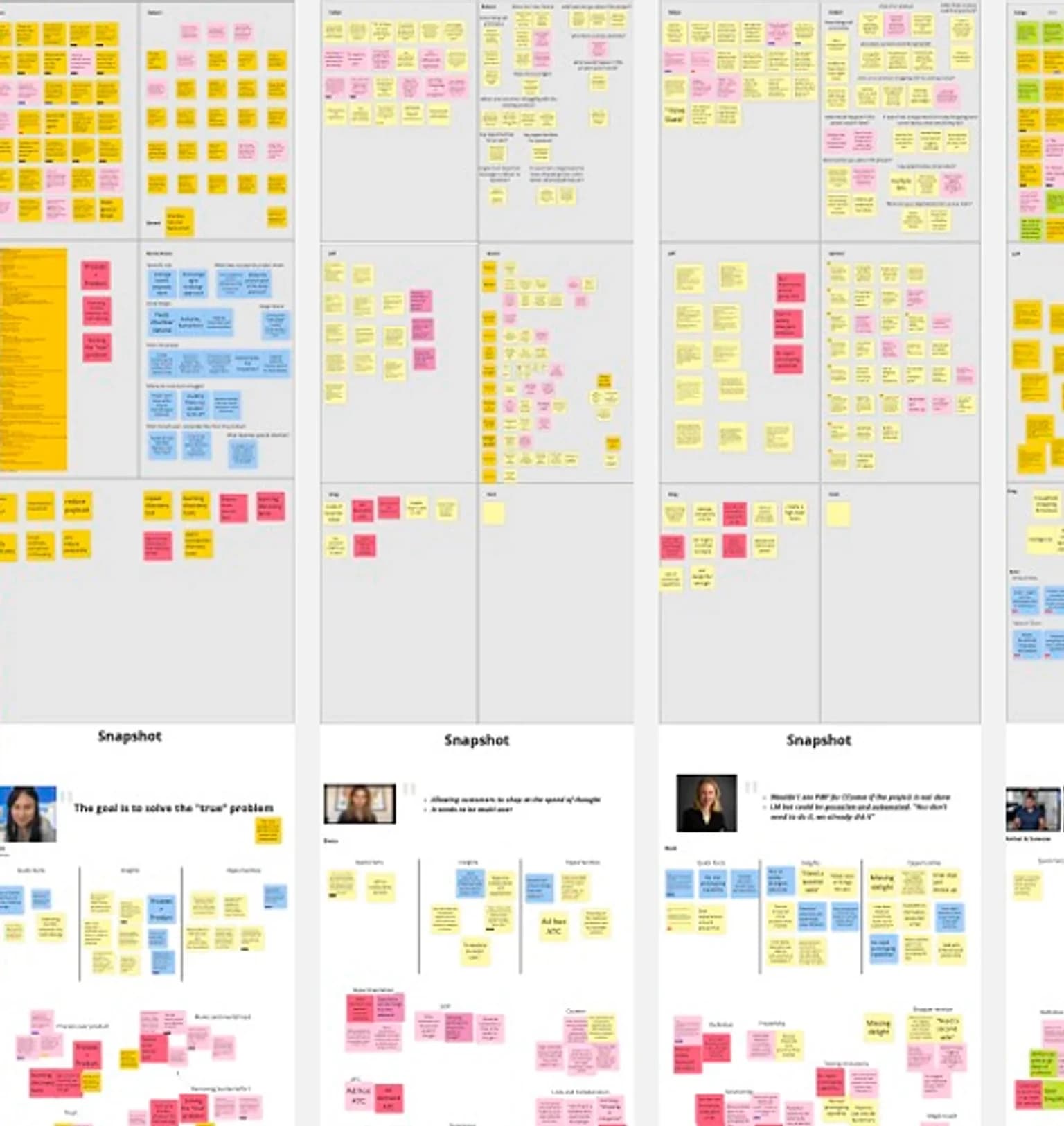
Stakeholder workshops and shopper-interview synthesis boards
Stakeholder workshops and shopper interviews across US demographics and geographies. We held back from solutions long enough to see what people were actually doing with their lists.

Approach

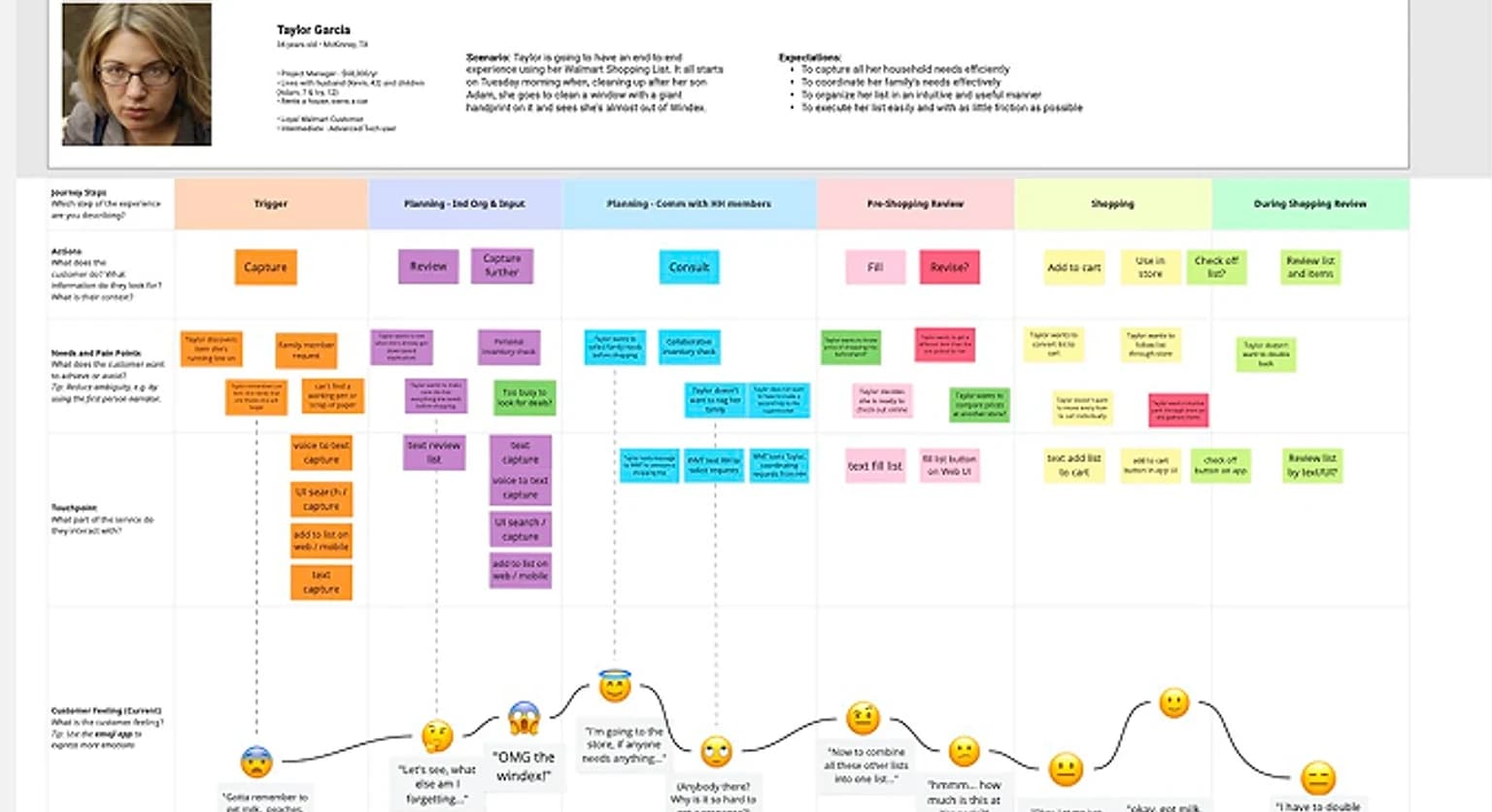
Day one was a Team Canvas with the whole pod on one wall: purpose, roles, working agreements, and an explicit agreement that experiments would fail. That was the point. What followed was six weeks of stakeholder workshops and in-depth shopper interviews across multiple US regions. Synthesis surfaced three behavioural patterns: busy parents abandoning lists under cognitive load, budget-conscious shoppers worn down by price-math, and routine shoppers blocked when a usual item went out of stock. Each pattern earned its own end-to-end journey map. Those maps drove every design call after that.
Taylor Garcia customer journey map, trigger through during-shopping review
Taylor Garcia's journey, end to end. Trigger, planning, household coordination, pre-shopping review, shopping, and review. The map kept design decisions tied to real shopper behavior.

Process

From the journey maps and persona clusters, the design exploration ran in the open. Affinity diagrams pulled the research signal into three concrete patterns the pod could design against, and reframed the strategy from adding features to removing decisions. Sketch rounds stayed on paper: voice-to-shop and text-to-shop flows competed for ship attention, with weaker ideas killed cheaply. By the time anything went to pixel, the strongest service path had earned it.
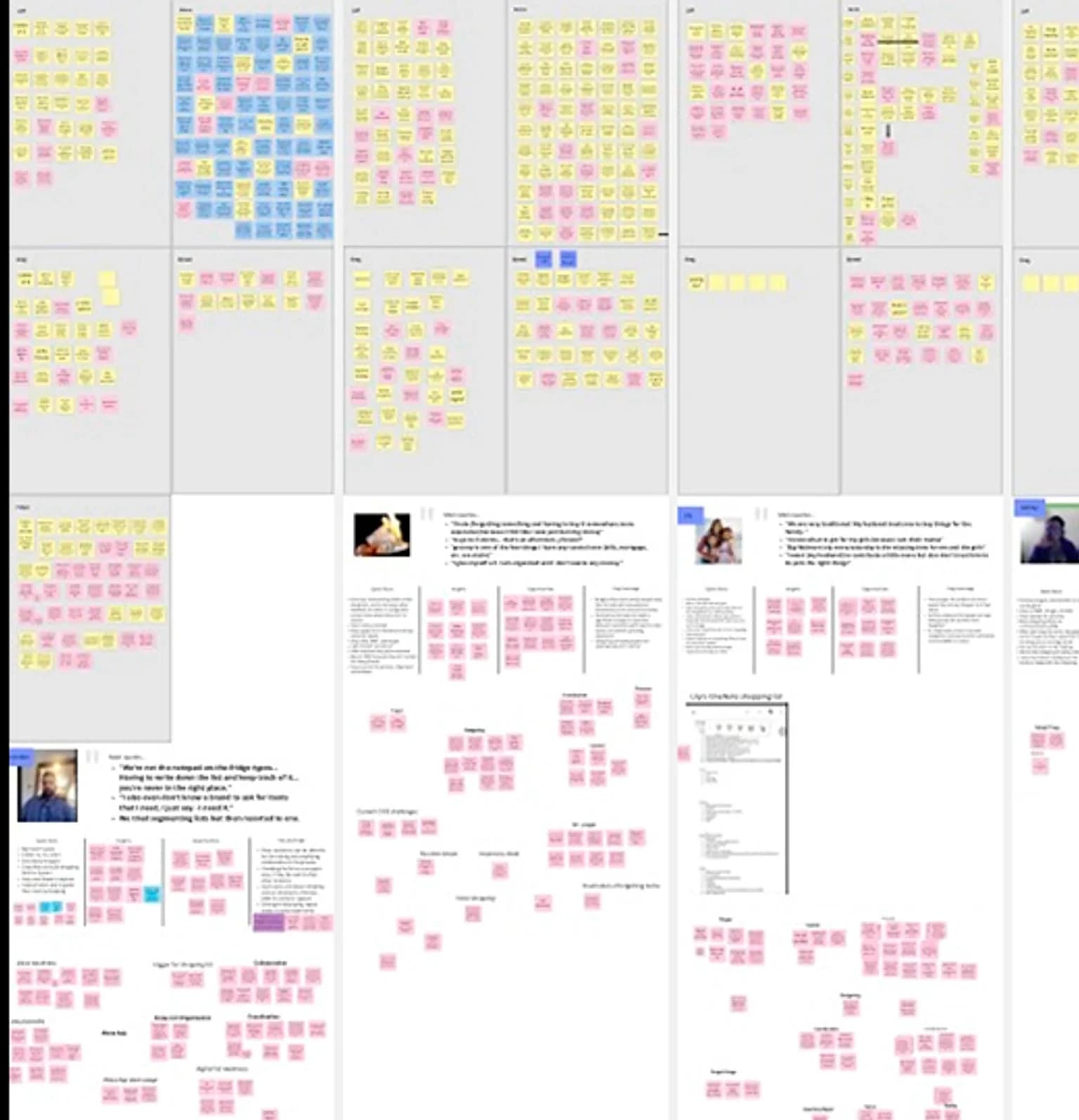
Affinity diagrams clustering hundreds of interview insights
Affinity diagrams turned the research into three useful patterns: busy parents, budget-conscious shoppers, and routine shoppers. The strategy shifted from adding features to removing decisions.

Outcome

Voice-to-shop landed inside the Walmart app. Tap once, say what you want, watch the list build. Hands-free, no typing. Text-to-shop landed in SMS. Customers add to their list, review what's there, and check out: five taps from 'review my list' to a ready-to-buy basket, all inside the messaging app they were already using.

01120M+Monthly shoppers in Walmart's audience
02$60.4BWalmart's e-commerce ecosystem
036Pod size: 2 engineers, 2 PMs, 2 designers
048 moDiscovery to shipped product, end to end
Next project